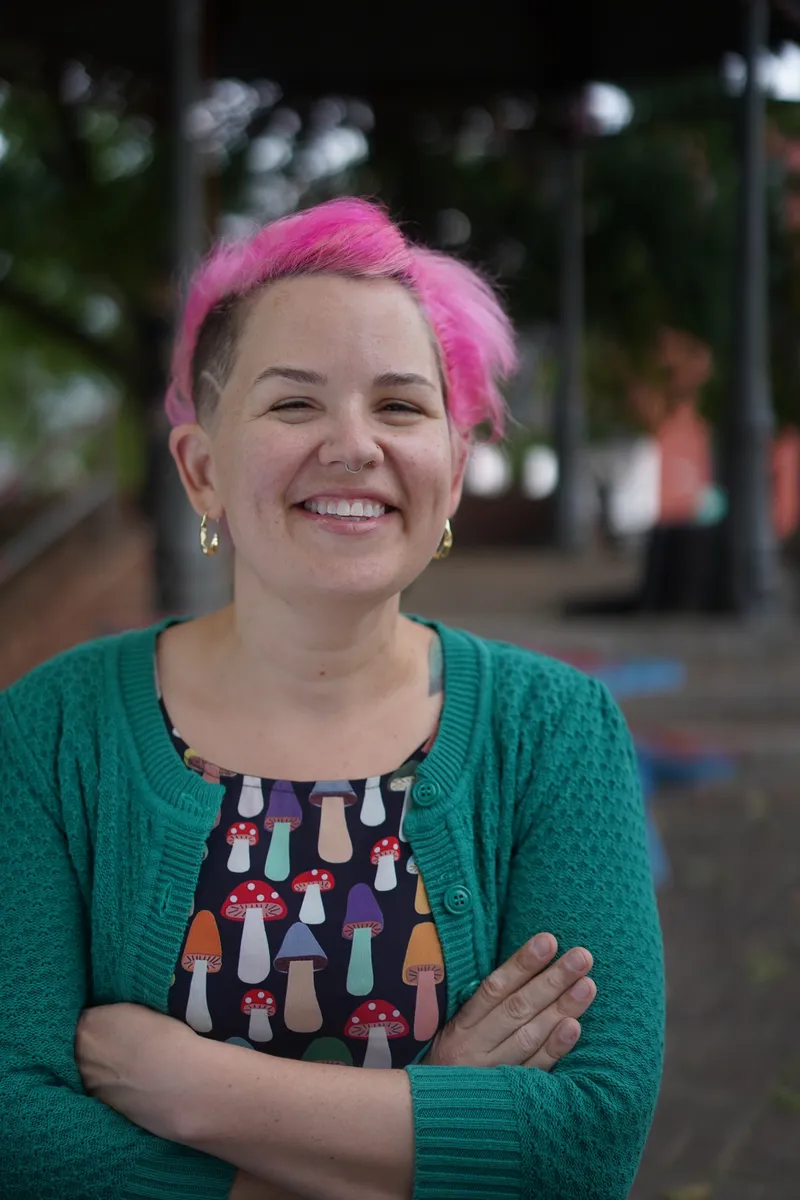
As a candidate focused on practical civic engagement, I believe Ward 1 residents deserve clear answers rather than staged candidate forums. In past cycles and again this year, Community Vision has sent out anonymous questionnaires with rigid 500-character limits and biased framing meant to push an anti-growth agenda and promote their preferred candidates. Instead of directing voters to a platform that distorts policy debates and conceals its own leadership, I am answering these questions directly here. Below are my honest, unconstrained views on housing, infrastructure, and city priorities, without intermediaries or political spin.
Key Topics Covered
- Question 2: Rent Stabilization — Protecting tenants, supporting small landlords, and capital improvements.
- Question 3: Scale & Type of Development — Housing pathways, transit corridors, and canopy preservation.
- Question 4: Property Taxes & City Budgets — Expanding the tax base vs. cutting municipal services.
- Question 5: Two-Year vs. Four-Year Council Terms — Governance efficiency, expertise, and charter process.
- Question 6: Civic Participation & Meeting Decorum — Inclusive outreach and maintaining respectful public hearings.
- Question 7: Immigrant Community Protections — Emergency rent relief and expanding municipal legal aid.
- Question 8: Racial Equity in Practice — Moving beyond checklists to real-world housing affordability.
- Question 9: Climate Adaptation & Biodiversity — Transit-oriented density, tree canopy equity, and green infrastructure.
- Question 10: City Transparency & Accountability — Personnel confidentiality, Open Meetings compliance, and 30x30 policing goals.
Question 2: Rent Stabilization
Do you think Takoma Park's rent stabilization law needs to be changed, and if so, what changes do you support and why?
I support keeping Takoma Park's rent stabilization law, but it needs sensible updates. I do not support scrapping it or making sweeping changes overnight. Its core purpose should stay the same: protecting tenants from sudden displacement and keeping rental housing affordable. At the same time, we need to ensure the law supports building maintenance and doesn't discourage owners from keeping or improving rental units.
This is especially important for small landlords. If we want Takoma Park to add housing through small apartment buildings, we need a regulatory system in which people can realistically create, maintain, and improve those homes. We should not create incentives for small property owners to remove rental units from the market because maintaining them has become financially impractical. I would support making the capital-improvement process simpler and more predictable for small landlords while maintaining strong tenant protections.
I also believe we should reconsider how rent stabilization applies to newly constructed rental housing. Takoma Park has added very little new rental housing over the past several decades, so we need to be careful that our policies do not discourage new construction. The city's current review should help determine what changes to the existing exemption are appropriate. I do not think we should decide that question before the study is complete, but I do believe the current policy deserves serious examination.
Vacancies also offer a chance to renovate units that would be difficult to upgrade while occupied. I support creating a clear, standard process for landlords who make documented capital improvements. If an owner installs new HVAC systems, adds in-unit laundry, updates energy efficiency, or makes other major upgrades, they should have a predictable path to recover part of that investment. Our policies should encourage owners to refresh these homes while keeping them on the rental market. Alongside this, I strongly support Just Cause eviction protections so tenants aren't pushed out simply to reset rent levels. I have testified in favor of Just Cause legislation in the Maryland Senate and will continue backing those protections.
We should measure rent stabilization not just by individual rent checks, but by the overall health and affordability of our housing stock. A low rent in one unit doesn't help much if the building falls into disrepair or gets taken off the market entirely. Tenants deserve predictable rent increases, while property owners need a clear ruleset that encourages proper maintenance.
Finally, rent stabilization works best alongside public programs and incentives for housing preservation. A balance needs to be found between protecting tenants, keeping existing homes safe and affordable, and encouraging more rental housing options across Takoma Park.
Question 3: Scale & Type of Development
What is your vision for the scale and type of development in our City in order to best serve our community?
My vision is a city where more families can afford to settle and stay while preserving what makes Takoma Park unique. That means creating real pathways to homeownership such as condos, smaller starter homes, duplexes, quadplexes, and ADUs. Near DC, middle-income homeownership won't come from building more detached single-family houses; we have to offer varied, realistic housing types.
We should focus our highest density along the Purple Line, near Metro, the Adventist Hospital site, and on underused commercial property like the Maple Avenue parking lots. Across residential neighborhoods, modest growth should come from allowing duplexes, quadplexes, and small multi-family conversions near transit, while respecting setbacks, tree canopy, and stormwater rules.
Building more single-family detached houses doesn't make sense for Takoma Park anymore. We need to use our land efficiently to build a truly integrated city, spreading affordable housing across all neighborhoods rather than clustering it in specific corridors. New projects should blend market-rate and income-restricted units. Since no single development fixes everything, we should prioritize specific community needs for each site, whether that's affordable housing, starter homes, better sidewalks, tree planting, or stormwater management.
Preservation shouldn't mean encapsulating the city as is. It means protecting what makes our community special: walkability, mature trees, local businesses, strong neighbor connections, and our eclectic character. I welcome diverse architecture, including modern designs that fit right alongside existing homes. Our neighborhoods should also reflect the people living here today, including the traditions, arts, and small businesses that immigrant communities bring.
Our tree canopy is an important part of Takoma Park's character and existing tree protections should not be weakened to accommodate development. Where possible new development should actually increase tree canopy. The redevelopment of underutilized, heavily paved properties is an opportunity to improve stormwater management.
We need infrastructure to keep pace with growth, but waiting for new schools or utilities to appear before permitting housing stalls progress completely. School districts and other agencies adjust capacity after demand grows, not before. Our job is to plan responsibly for growth and advocate for appropriate facility investments to follow. The public benefit tools in the Minor Master Plan give us leverage to ensure new projects actively contribute to municipal needs.
Takoma Park has added very little housing over the past several decades. I believe we need to participate meaningfully in meeting our share of regional housing needs while making sure that new development produces a walkable and economically diverse community.
Question 4: Property Taxes & City Budgets
Increasing property taxes to pay for bigger City budgets is making it harder for some homeowners and renters to remain in our community. What changes will you support to address this issue?
I agree that keeping Takoma Park affordable is essential, but I don't accept the implication that rising costs stem mainly from excessive city spending or overstaffing.
The core issue is that housing costs have surged region-wide while our local tax base hasn't grown enough to absorb inflation. We can't fix that simply by slashing municipal services to the point where our city no longer functions. The real fix is expanding our tax base through smart development so the financial weight doesn't fall entirely on existing homeowners.
Recent city budgets show disciplined management rather than runaway spending. The FY2026 tax rate stayed flat at $0.5522, while total expenditures dropped by about $3 million with zero staff additions. For FY2027, Council trimmed the tax rate to $0.5422 as our overall property value base grew by $138 million. (FY2024 & FY2025 it was also 0.5522.)
Our staffing aligns with what residents expect from city services. Position adjustments should happen based on actual operational needs, not by spending money on outside consultants to tell us what we already know. Core services like public works and police must stay properly staffed, especially since county tax reimbursements offset significant parts of those costs.
Broad cuts simply won’t work. We must provide property-tax relief for homeowners who are struggling. The City recently expanded its supplemental homeowner property-tax credit, and I support using that program to provide targeted assistance to income-eligible homeowners. The City's expanded program provides additional relief to qualifying homeowners beginning in FY2027.
Longer term we need to expand the tax base. A small group of homeowners and small businesses shouldn't carry all the weight of funding city services. We need new housing and infill projects that bring in revenue, expand housing choices, and support our local economy without overburdening public infrastructure. The lack of new housing directly harms economic vitality. Takoma Park has seen almost no multi-family development in decades. Bringing in new residents gives local businesses a larger customer base and helps diversify municipal revenue sources.
Lastly, we should eliminate low-value spending and avoid redundant studies. Public dollars belong in direct services, infrastructure maintenance, economic growth, and targeted assistance for residents who need help.
We can only reduce the property-tax rate so far while continuing to provide the services that make Takoma Park the community people want to live in. The answer to rising individual tax burdens is not simply to make City government smaller; it is to spread that burden across a larger and stronger tax base while providing targeted relief to homeowners who need it. That means allowing responsible housing and economic development rather than effectively freezing the City in place.
Question 5: Two-Year versus Four-Year Council Terms
What is your position on two-year versus four-year terms for City Councilmembers, including whether that decision should be voted on by residents or be approved by a simple majority vote of the Council?
I support changing Takoma Park City Council terms from two years to four years. Having served on the Council, I believe four-year terms would allow Councilmembers to spend more of their limited time governing and less of it campaigning.
Serving on Council is a heavy commitment. Councilmembers balance full-time jobs, families, and community work. Under a two-year system, much of the first year goes toward learning city operations and building working relationships, only for the next election cycle to start almost immediately. The city's own evaluation pointed out how much time new members need to get up to speed and how little room two-year cycles leave for steady governance.
I have seen the value of allowing Councilmembers time to develop expertise and make an impact. Councilmember Cindy Dyballa, for example, has had the opportunity to develop a deep understanding of the City's environmental practices and then use that knowledge to work with others on the state and national level. That kind of expertise and broader impact takes time to develop; it is difficult to accomplish when elected officials are constantly preparing for another election.
Elections also carry hidden costs beyond official administration budgets. Running campaigns every two years demands constant fundraising, volunteer time, candidate energy, and community attention that could be spent on governance.
I understand the argument that two-year terms provide greater accountability. I believe accountability is better measured by how well elected officials communicate with and serve residents between elections, not simply by how frequently they face the voters. I intend to continue providing weekly summaries of Council meetings and maintaining regular communication with residents. Four-year terms would not change that commitment.
I believe this change should be made through the City's existing Charter amendment process rather than through a separate referendum. The Charter gives the Council authority to initiate amendments concerning the length of Council terms, subject to the required public hearing and amendment procedures, which is how it was done when the Council went from three to two year terms. This is a change to the structure of municipal government, and I believe the Council should use the process established for making that kind of structural change.
Four-year terms would give Councilmembers the time to learn the job, develop meaningful expertise, pursue longer-term priorities, and actually govern, while remaining accountable to residents throughout the term.
Question 6: Civic Participation & Meeting Decorum
How would you promote the meaningful participation of a wide range of residents in Council decision-making? And, what is your position on the public being allowed to clap and hold signs at City Council meetings?
These are two very different topics: one is about expanding civic access across the city; the other is about keeping basic order in hearing rooms so everyone feels respected.
1. Promoting Meaningful Participation Across Takoma Park
Civic engagement isn't measured by who can sit through a four-hour meeting on Wednesday night. Relying only on people who show up to the microphone means hearing repeatedly from a small group while missing working parents, hourly workers, renters, and young people whose lives are directly impacted by housing and budget choices.
Meaningful engagement requires the Council to meet people where they are. I believe elected leaders must be radically accessible. Throughout my service, I have always made myself available at all hours for in-person conversations and one-on-one meetings to ensure any resident, regardless of their work schedule, can share their concerns directly. I regularly published detailed Council summaries, budget overviews, and policy explanations so that residents who cannot attend legislative sessions are never left in the dark about decisions impacting our neighborhoods. Through my leadership as Executive Director of Takoma Park Lunch & Learn I work every day with families and young people who are rarely seen at City Hall hearings. Council decision-making must actively include multilingual outreach and digital input options that remove childcare, transportation, and scheduling barriers.
2. Decorum, Clapping, and Signs in Council Chambers
When it comes to in-person testimony, our standard must be simple: every resident who steps up to the microphone deserves their full three minutes without intimidation, distraction, or performance.
A public hearing is a venue for formal testimony, not a sports match. When organized groups cheer allies and freeze out opposing views, it creates an intimidating room where first-time speakers hesitate to stand up. Holding signs behind people giving testimony distracts from their allotted time and undermines their ability to speak freely.
If we are genuinely committed to a diversity of opinions, we must recognize that this behavior has a chilling effect on first-time speakers and residents with differing perspectives.
Rules against cheering, jeering, and sign-waving are standard in local governments across Maryland. They don't restrict speech, they protect it. We should ensure any resident can address Council without feeling targeted or shouted down.
Question 7: Immigrant Community Protections
Does the City do enough to protect the nearly one-third of Takoma Park residents who are immigrants and, if not, what further steps should the City take to do so?
Takoma Park has a strong history of standing up for immigrant neighbors, starting with our 1985 Sanctuary Ordinance preventing local police from joining federal immigration enforcement, and continuing with non-citizen voting in 1993. These steps established an important foundation for community trust.
Resolutions alone aren't enough. Real protection means offering practical support where families feel pressure most directly: legal defense and everyday security.
My perspective is grounded in hands-on work in our neighborhoods. Leading Takoma Park Lunch and Learn, I work directly with the immigrant and working-class families who make up the majority of our program. Through my service on the Takoma Park Police Chief’s Advisory Board, we routinely discuss the fear that federal immigration activity and ICE create across our community, and the critical importance of ensuring residents can seek city services and local safety without hesitation.
The two best ways for the City to help at this time is through increased funding to programs:
- Targeted Emergency Rent Relief: When a household wage earner is detained or deported, the remaining family members face an immediate economic crisis. The City should establish a targeted emergency housing assistance fund specifically to cover rent for families impacted by immigration actions, preventing sudden eviction and displacement.
- Increasing Municipal Legal Aid Funding: Navigating asylum hearings, work authorization, and deportation defense is complex and expensive. Takoma Park should expand municipal funding for local legal aid partners, ensuring our residents have access to qualified representation to defend their rights and remain together.
Question 8: Racial Equity in Practice
Do you think the City’s commitment to racial equity is effective (please elaborate)?
Takoma Park has taken good initial steps to focus on racial equity, including non-citizen voting rights and strong tenant protections. But commitment to equity shouldn't stay on paper. It has to be judged by whether working families can actually afford to live here long-term.
Too often, racial equity reviews operate as procedural checklists during Council discussions. While that creates a helpful baseline, equity needs to show up in real-world outcomes. When home prices rise out of reach for almost everyone except top earners, our community diversity gets squeezed out.
Limited housing options across Takoma Park keep neighborhoods divided along economic lines. Invoking "neighborhood character" to block multi-family homes reinforces old exclusionary patterns, locking out Black, Latino, and working-class families looking to build roots here. Expanding housing choices is essential if we want real, lasting equity.
Question 9: Climate Change Adaptation & Biodiversity
What should the City do to advance meaningful climate change adaptation and resilience, and address biodiversity loss?
Environmental work requires recognizing that natural systems don't stop at city borders. Takoma Park can lead by combining strong local conservation with regional growth strategies that reduce emissions and protect habitats.
Our current work provides a strong foundation: tree canopy preservation, stormwater and watershed care, and food waste diversion.
To build long-term resilience, our next phase should focus on:
Compact, Transit-Oriented Density as Climate Action
Low-density suburban sprawl is a primary driver of forest loss and vehicle emissions region-wide. Building walkable, transit-adjacent housing in commercial corridors reduces driving while protecting regional green spaces. New projects should follow high standards for runoff treatment, permeable surfaces, and energy efficiency.
Urban Canopy Equity and Pedestrian Safety
Tree canopy provides crucial cooling, carbon absorption, and stormwater management. We must target tree preservation and planting where it is needed most:
- Realistic Tree Replacement Fees: Fee-in-lieu and replacement requirements must reflect the actual cost of establishing new mature native trees when removal is necessary.
- Shade Along Pedestrian Corridors: Prioritize tree planting along sidewalks and transit stops to protect pedestrians from extreme heat and encourage active transportation.
- Multifamily Canopy Equity: Partner with property managers to offer technical assistance and incentives for planting shade trees on rental properties, mitigating heat islands in under-canopied areas.
Action-First Stormwater Infrastructure
Instead of funding repetitive studies, the City should direct capital toward shovel-ready green infrastructure projects, including:
- Expanding Bioswales & Bioretention: Rain gardens and bioretention cells in flood-prone areas like the Sligo Creek watershed, Maple Avenue, and Belle Ziegler Park.
- Enforcing Runoff Treatment Targets: 50% on retrofits, 100% on new sites.
- Permeable Surfaces: Replacing impermeable surfaces with permeable pavement and native plantings to filter runoff.
Focusing on practical infrastructure, canopy equity, and smart land use allows Takoma Park to lead on climate resilience while remaining an equitable community.
Question 10: Transparency & Accountability
How could the City improve transparency and accountability in the wake of the sexual harassment lawsuit against the City?
Having served on the City Council, I know firsthand that accountable governance requires distinguishing between everyday public business and matters bound by strict legal confidentiality.
Under Maryland Open Meetings law, personnel matters, litigation, and collective bargaining must occur in closed sessions. These laws protect privacy rights and shield taxpayers from legal liability. Conflating legal requirements with a lack of openness misinterprets how municipal law operates.
Claims that the city concealed this matter ignore the public record. The Mayor and Council published a detailed timeline and explanation as soon as legal restrictions allowed. Additionally, the $1 million settlement was covered directly by the city's municipal insurer rather than operating funds.
True accountability is about prevention, culture, and structural integrity. Looking forward, the City’s priority must remain on strengthening anti-harassment policies, ensuring transparent and timely updates to affected employees during internal reviews, and maintaining independent, safe reporting mechanisms to protect our entire municipal workforce. Furthermore, I see the Takoma Park Police Department’s commitment to the “30X30” initiative, the effort to increase female representation in the police force to thirty percent, as a goal that will improve policing.